Overview
When it comes to savings account vs loan in Australia, most borrowers get caught in a costly trap. While your savings account might earn 2–3% interest, the average home loan charges 5–6% and credit cards sting you with 15–20%. That means every dollar “saved” could actually be costing you more in loan repayments. In this blog, we’ll explain offset accounts, how to reduce home loan interest, why savings don’t beat loan repayments, and share smart money tips Australians can use today to stop banks from winning twice.
A Wake-Up Call for Aussie Borrowers
How many of you have a savings account sitting quietly in your bank… while still paying thousands in interest on a home loan, car loan, or personal loan?
Here’s the hard truth:
For most Australians, the interest you earn on savings is much lower than the interest you pay on debt.
In other words, you’re saving but your bank is making more.This blog explains why that happens, how it quietly eats away at your wealth, and what you can do right now to flip the script.
Why Savings Accounts Can’t Beat Loan Interest
Let’s break it down simply.
- Average savings account interest in Australia (2025): ~2–3% p.a.
- Average home loan interest rate: ~5–6% p.a.
- Average credit card interest rate: ~15–20% p.a.
Example:
You keep $20,000 in a savings account earning 3% interest = $600/year (before tax). But you have a $20,000 car loan at 9% interest = $1,800/year paid to the bank.
Result? You’re losing ~$1,200/year even though you’re “saving.”
The Hidden Cost: Paying Interest While You Save
Banks love when you:
- Keep money in a savings account (they use it to lend to others)
- Keep paying interest on your loans (they profit twice)
For you, it often means:
- Low net returns
- Slow debt repayment
- Money that could work harder elsewhere
What’s the Smarter Alternative?
1. Use an Offset Account
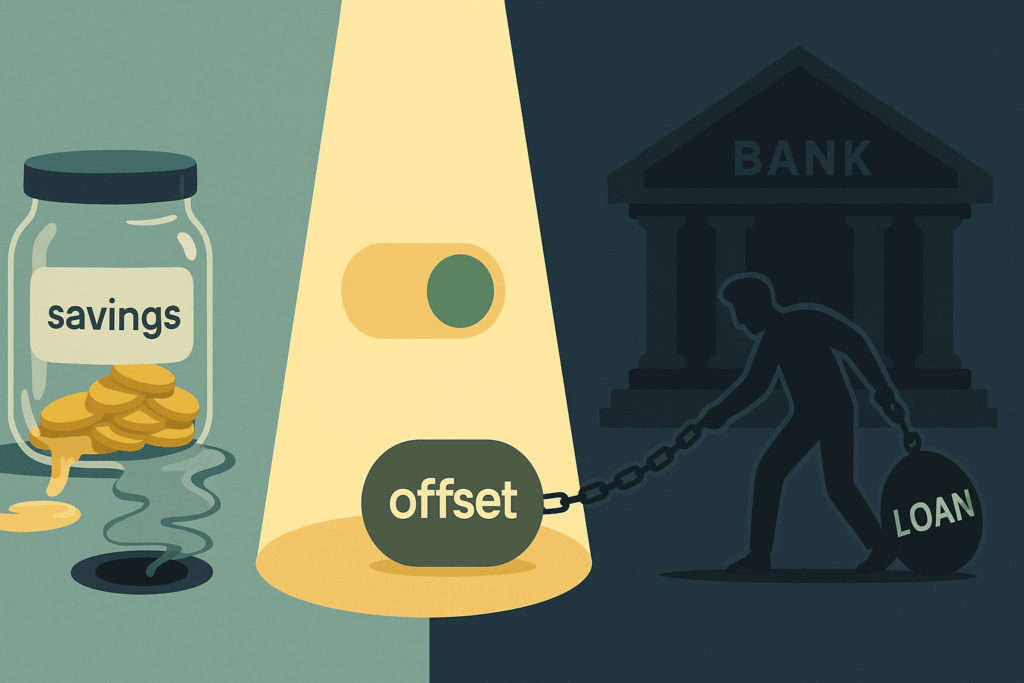
An offset account links your savings to your home loan, reducing the loan balance you pay interest on.
Example:
- $500,000 home loan
- $50,000 in offset
- You pay interest on $450,000, not $500,000
This saves you more than a stand-alone savings account can earn with no extra risk.
2. Make Extra Loan Repayments
If your loan allows, consider making extra repayments.
Benefits:
- Reduces loan principal faster
- Cuts total interest paid
- Shortens loan term
3. Pay Down High-Interest Debts First
Credit card debt, payday loans, and personal loans often charge 15–20%+ interest. Paying these down offers a guaranteed “return” much higher than any savings account.
The Biggest Mistake to Avoid
Many people hold onto savings as a “security blanket” but leave high-interest debts running.
Better approach? Keep a small emergency buffer (e.g., 1-3 months of expenses), but direct surplus cash toward loans or offset accounts where it works harder.
Real-Life Aussie Example
Sarah from Melbourne had:
- $30,000 in a 3% savings account
- $30,000 in personal loans at 10%
After reviewing her finances:
- She used $20,000 to pay down the loan, keeping $10,000 as an emergency fund.
- She saved ~$2,000/year in interest 3x what the savings account was earning.
Final Takeaway: Make Your Money Work Smarter
- Compare your savings interest vs. your loan rates
- Use offset accounts if you have a mortgage
- Make extra repayments where possible
- Don’t let “lazy cash” cost you money
Want a free loan and savings health check?
Contact us we’ll show you exactly where your money can save you the most, not just sit in a low-interest account.